
+86-19357103769
Author: Site Editor Publish Time: 2026-05-26 Origin: Site


In steam systems, timely condensate discharge and thermal energy recovery are critical to system efficiency and equipment safety. The inverted bucket steam trap is a classic mechanical steam trap widely used in industries such as power generation, chemical processing, oil & gas, food, and pharmaceuticals due to its simple structure, reliable operation, and strong resistance to high temperature and high pressure conditions.
This article provides a systematic and professional analysis of the inverted bucket steam trap, covering its structure, working principle, characteristics, applications, and selection considerations.
An inverted bucket steam trap is a mechanical device that automatically discharges condensate by utilizing the density difference between steam and water and the buoyancy changes of an inverted bucket.
During steam system operation, condensate continuously forms. If it is not discharged in time, it can significantly reduce heat transfer efficiency and may cause water hammer, damaging pipelines and equipment. Therefore, steam traps play a crucial role in automatic condensate removal and steam retention within the system.

The valve body serves as the pressure-containing shell of the steam trap. It is typically made of cast steel, stainless steel, or ductile iron to withstand high-temperature and high-pressure steam conditions. The internal flow path design directly affects drainage efficiency and flow resistance.
The inverted bucket is the core working component, shaped like an upside-down cup. A small hole at the bottom allows air venting and pressure balancing. The bucket is connected to the valve plug via a lever mechanism, and its movement directly controls valve opening and closing.
The lever mechanism converts the vertical movement of the bucket into valve actuation. As the bucket rises or falls, the lever transmits motion to open or close the valve automatically.
The valve seat and plug form the sealing pair that controls condensate discharge. When the plug is pressed against the seat, the valve remains closed; when lifted, condensate is discharged.
The vent hole is used to discharge air and non-condensable gases. This is particularly important during system startup, as air accumulation can reduce heat transfer efficiency.
At system startup, the pipeline is filled with a mixture of condensate and air. The inverted bucket, being relatively light, remains in a lowered position, keeping the valve open and allowing condensate to discharge freely.
As steam enters the trap, it fills the inside of the inverted bucket. Due to the low density of steam, buoyancy increases, causing the bucket to rise and close the valve, preventing steam loss.
Once the valve is closed, condensate begins to accumulate outside the bucket. Meanwhile, steam inside the bucket gradually condenses or escapes through the vent hole, increasing the bucket’s weight.
When the bucket becomes heavy enough, it sinks, reopening the valve and rapidly discharging condensate. The system then repeats this cyclic operation automatically.
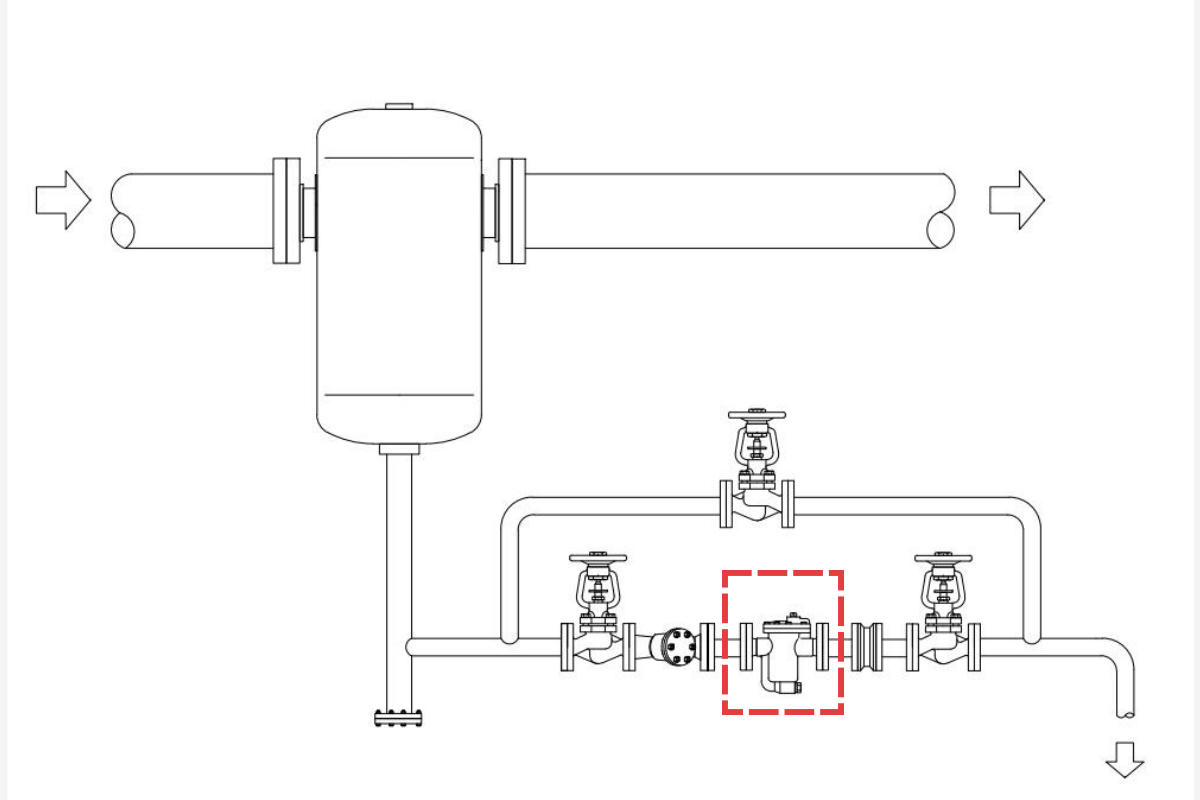
With a purely mechanical structure and no reliance on elastic components, the device is well-suited for high-temperature and high-pressure industrial environments, ensuring stable long-term operation.
The internal design effectively mitigates water hammer impacts, reducing the risk of mechanical damage caused by pressure fluctuations.
It ensures timely condensate discharge while preventing steam leakage, reducing energy losses and improving overall system efficiency.
With fewer moving parts and low wear rates, the steam trap can operate reliably for long periods with minimal maintenance requirements.
In industrial steam networks, inverted bucket steam traps are widely used to discharge condensate from pipelines and prevent water hammer. If condensate accumulates, it reduces steam dryness and significantly lowers thermal efficiency. With stable drainage performance, these steam traps help maintain high-quality steam throughout the distribution system.
In chemical reactors, heat exchangers, and refining units, steam is commonly used for heating and maintaining reaction temperatures. If condensate is not properly removed, heat transfer efficiency decreases and localized overheating may occur. Inverted bucket steam traps operate reliably under high temperature and pressure, ensuring accurate process control and continuous system operation.
In thermal power plants, steam systems are extensive and operate under complex conditions, requiring highly reliable condensate removal equipment. Inverted bucket steam traps are commonly used in boiler auxiliary systems, heating equipment, and steam-water separation systems. Their strong pressure resistance and anti-shock capability make them suitable for fluctuating load conditions in power plants.
Food processing and pharmaceutical industries require strict hygiene standards and stable steam supply for sterilization, heating, and drying processes. Due to their simple structure and stable operation, inverted bucket steam traps are widely used in clean steam systems. Their reliable drainage performance also helps ensure consistent product quality.
Different systems operate under varying steam pressure and temperature conditions. Therefore, proper model selection is essential. Undersized traps may cause insufficient drainage, while oversized ones may reduce control sensitivity. Correct selection is critical for long-term system stability.
Inverted bucket steam traps must be installed in the correct orientation according to design specifications. Incorrect installation can affect bucket movement and prevent proper valve operation. They are typically installed on horizontal pipelines or at the lowest point of equipment to ensure efficient condensate collection and discharge.
Steam systems often contain rust, welding slag, or other particulates that may block the vent hole or sealing surfaces, affecting performance. To ensure stable operation, a strainer is recommended upstream of the steam trap, along with regular cleaning and maintenance.
Although inverted bucket steam traps are highly reliable and require minimal maintenance, long-term operation may still lead to wear or performance degradation. Periodic checks of drainage performance and valve operation are recommended. In critical systems, online monitoring can further enhance safety and efficiency.
As a mature and reliable mechanical steam trap, the inverted bucket steam trap utilizes the physical differences between steam and condensate to achieve automatic, self-powered drainage control without external energy input. With its stable structure, strong adaptability, and long service life, it remains an indispensable component in modern industrial steam systems.
As industrial energy efficiency requirements continue to rise, its application will further expand, especially when integrated with intelligent monitoring systems to enhance overall energy utilization and operational safety.
For more information about industrial system,you can visit our website: www.fuchen-steam.com
And contact us at +86-19357103769 or Fuchen@fuchensteam.com.


