
+86-19357103769
Author: Site Editor Publish Time: 2026-07-13 Origin: Site


In steam systems, the steam trap is a critical device for ensuring efficient operation. Its core function is to automatically discharge condensate, air, and non-condensable gases while preventing steam loss. If a steam trap is incorrectly selected or fails during operation, it can lead to energy waste, reduced heat transfer efficiency, water hammer, and even equipment corrosion.
Based on working principles, steam traps are generally classified into three main categories: mechanical type, thermostatic type, and thermodynamic type, each with different structural forms and application conditions.
A steam trap is essentially an automatic phase-separation device that operates based on differences in density, temperature, or flow dynamics between steam and condensate.
During steam system operation, condensate is continuously generated. If not properly discharged, it forms a liquid film that reduces heat transfer efficiency and increases flow resistance. A steam trap is designed to ensure fast condensate removal without steam leakage.
From an engineering perspective, an ideal steam trap must achieve three key objectives:
Rapid condensate discharge
Zero steam leakage
Strong adaptability to load fluctuations
Mechanical steam traps operate based on the density difference between steam and condensate, and are among the most widely used in industrial applications.
The float type uses a floating element that rises and falls with condensate level changes to control valve opening and closing, enabling continuous discharge.
Its main advantage is continuous drainage and strong adaptability to load variations, making it suitable for heat exchangers and jacketed vessels with fluctuating thermal loads.
However, due to its relatively precise internal structure, impurities in condensate may cause float sticking or seat wear, leading to steam leakage or poor drainage performance.
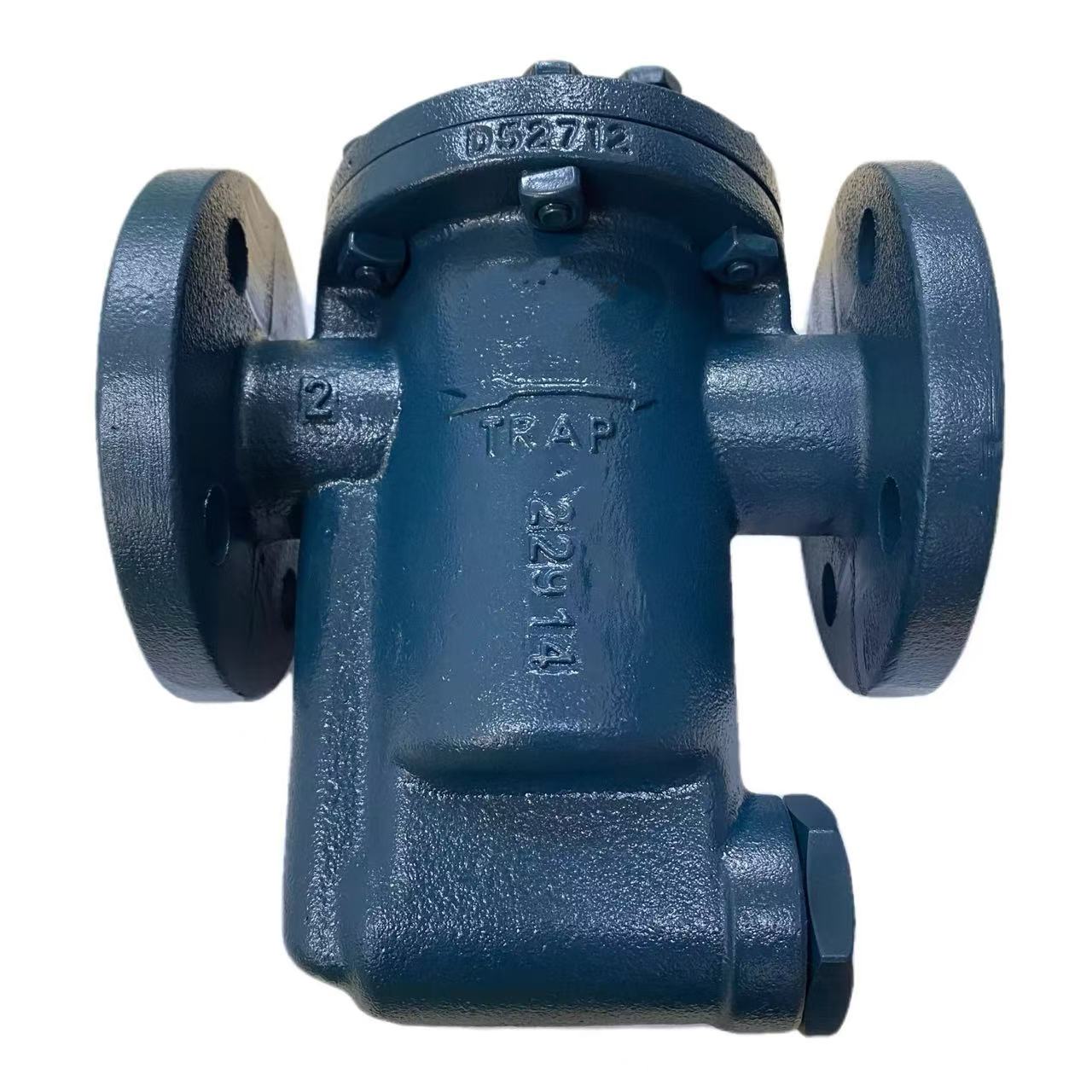
The inverted bucket type operates based on buoyancy differences. Steam entering the bucket causes it to rise and close the valve, while accumulated condensate causes it to sink and open the discharge outlet.
It is known for excellent resistance to water hammer and strong durability under high-pressure conditions, making it suitable for steam mains and high-pressure systems.
However, since it operates in a cycle of accumulation and discharge, it provides intermittent drainage and may respond slowly under low-load conditions.
Thermostatic steam traps operate based on temperature differences and use temperature-sensitive elements to control valve movement.
This type consists of two metals with different thermal expansion coefficients. Temperature changes cause bending deformation, which drives valve operation.
Its advantages include simple structure, low cost, and easy installation, making it suitable for tracing lines and low-pressure systems.
However, because its operation depends on temperature differences, drainage during startup is relatively slow, which may cause condensate accumulation.
The bellows type uses a sealed liquid that expands when heated, causing deformation of the bellows to control valve opening and closing.
It provides relatively stable operation and good sealing performance, making it suitable for general industrial steam systems. However, long-term high-temperature exposure may lead to bellows fatigue failure.
Thermodynamic steam traps operate based on dynamic pressure differences between steam and condensate, and feature the simplest structure among all types.
When condensate enters, pressure changes lift the disc and open the outlet. When steam enters, the disc quickly closes due to pressure dynamics.
It is compact, highly resistant to high pressure, and widely used in steam distribution networks. However, under low-load conditions, it may experience frequent cycling or slight steam leakage.
This type uses a fixed orifice for throttling and has no moving parts.
Its main advantage is extremely high reliability and virtually maintenance-free operation. However, it cannot adjust to changing operating conditions, making it suitable only for systems with stable loads.
Type | Working Principle | Discharge Mode | Control Accuracy | Application | Advantages | Limitations |
Float Type | Liquid level & density | Continuous | High | Heat exchangers, variable load systems | High efficiency, stable operation | Sensitive to impurities |
Inverted Bucket | Buoyancy difference | Intermittent | Medium | High-pressure steam systems | Strong water hammer resistance | Slow response |
Bimetallic | Thermal expansion | Intermittent | Medium-Low | Tracing lines | Low cost | Slow startup |
Bellows Type | Liquid expansion | Intermittent | Medium | General industrial systems | Good sealing | Fatigue risk |
Disc Type | Dynamic pressure | Intermittent | Medium | High-pressure steam networks | Compact structure | Leakage under low load |
Orifice Type | Fixed throttling | Continuous | Low | Stable systems | No moving parts | No regulation ability |
Many steam trap failures are not due to product defects but incorrect selection.
Selecting high-pressure or high-performance traps without considering load fluctuations often leads to unstable drainage.
Systems with rust or debris should avoid precision float structures, as they are prone to clogging or sticking.
Disc-type traps may cycle frequently under low-load conditions, increasing steam loss.
Although steam traps are small components, they significantly affect system energy efficiency.
A malfunctioning steam trap that leaks steam can cause continuous energy loss, while poor drainage reduces heat transfer efficiency.
Engineering experience shows that faulty steam traps can result in 5%–15% steam energy loss, which becomes substantial in large industrial systems.
In practical applications, improving steam trap performance requires proper selection, installation, and maintenance.
Correct type selection based on operating conditions is essential. Installation direction must be strictly followed to avoid malfunction. Regular inspections should be conducted to detect steam leakage or blockage.
For critical systems, online monitoring solutions can be used to track steam trap performance in real time, improving maintenance efficiency and system reliability
Steam traps are mainly classified into mechanical, thermostatic, and thermodynamic types, each with different working principles, performance characteristics, and application scenarios.
Proper selection should consider load variation, pressure level, condensate quality, and system stability. Scientific selection not only improves steam system efficiency but also significantly reduces energy loss and operating costs.
With increasing industrial energy efficiency requirements, steam traps are evolving toward higher efficiency, intelligent monitoring, and predictive maintenance, making their role in modern steam systems increasingly important.
Website: www.fuchen-steam.com
Email: Fuchen@fuchensteam.com
Tel: +86-19357103769


