| Availability: | |
|---|---|
| Quantity: | |
Working Principle
The plate heat exchanger is composed of a set of corrugated metal plates with four corner holes for the passage of two liquids for heat transfer. The metal sheet is mounted in a frame having a fixed plate and a movable pressing plate on one side and clamped by a clamp bolt. A gasket is placed over the plate to seal the fluid passages and direct fluid flow alternately into the respective passages to form a heat exchange. The flow, physical properties, pressure drop and temperature difference of the fluid determine the number and size of the plates. The corrugation of the plate not only increases the degree of turbulence but also forms a number of support points sufficient to withstand the pressure difference between the media. The metal plate and the movable compression plate are suspended on the upper guide bar and positioned by the lower guide bar, while the rod end is fixed on the support. On the column, but if one or both of the liquids pass through the heat exchanger more than once, the interface should be on the fixed plate and the movable compression plate. In most cases, one-way is used, and all the pipes are connected to the fixed platen. On, check the shoes to open the heat exchanger without disassembling the pipe.
Advantages
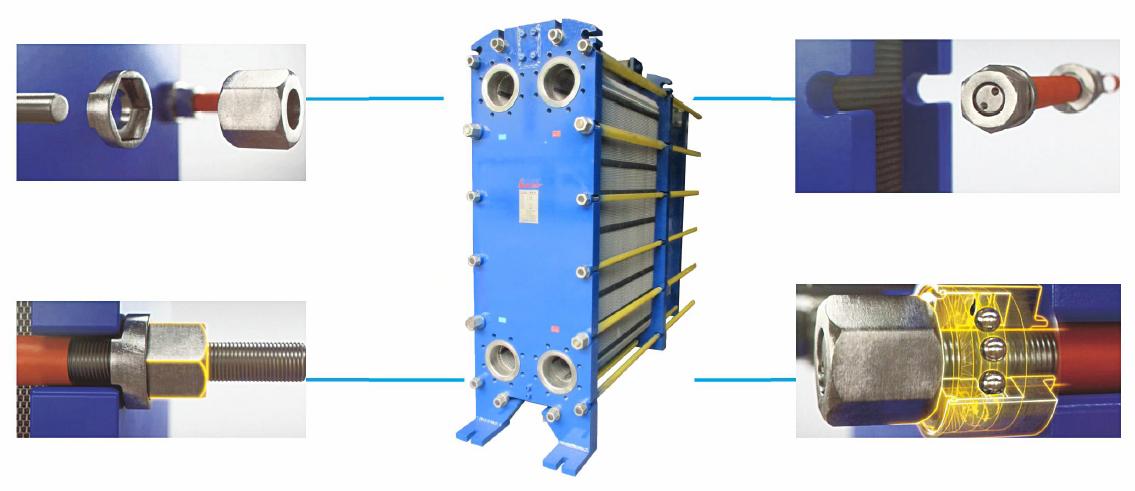
Unique positioning technology: To prevent the upper and lower positioning grooves of the plates from deforming during disassembly and assembly, the positioning device features a flanging design. After multiple disassembly and assembly operations, the positioning remains accurate, the positioning points are more wear-resistant, and it also protects maintenance personnel from potential injuries caused by the positioning grooves. The four corners of the plates are equipped with auxiliary positioning conical skirts to achieve automatic alignment.
Unique multi-point positioning with dovetail groove structure: This positioning method follows the basic mechanical positioning principle of “one plane, one fixed pin on one side, and one split pin on the other side”, which allows one degree of freedom for the workpiece. This can prevent over-positioning.
Benefits
Interlocking and mutual positioning: After the equipment is assembled, each plate is interlocked and mutually positioned.
Accurate positioning: It prevents inaccurate positioning due to insufficient rigidity of the middle positioning holes of the plates.
Leak prevention: It avoids equipment leakage caused by deformation of the middle positioning during plate maintenance and reassembly.
Suitability for specific working conditions: This plate design is particularly suitable for working conditions where the equipment is frequently disassembled and assembled, as well as those with fluctuating medium volume and pressure.
Five-point positioning structure: Most of the middle positioning structures of the plates adopt a “five-point positioning” structure.

The front clamping nut is integrated with the screw rod through the locking bolt, and a bearing box is installed below. The rear clamping nut uses a unique locking sleeve to prevent loosening. When disassembling and assembling the plate heat exchanger, it can be completed simply by tightening or loosening the front clamping nut. It is more convenient and faster to disassemble and assemble during the maintenance of the plate heat exchanger, which is a typical user-friendly design.
All components of the frame are connected by screw threads.
All the compression bolts are manufactured by rolling.
The compression bolts are equipped with bearing boxes.
The compression bolts can be removed from the side
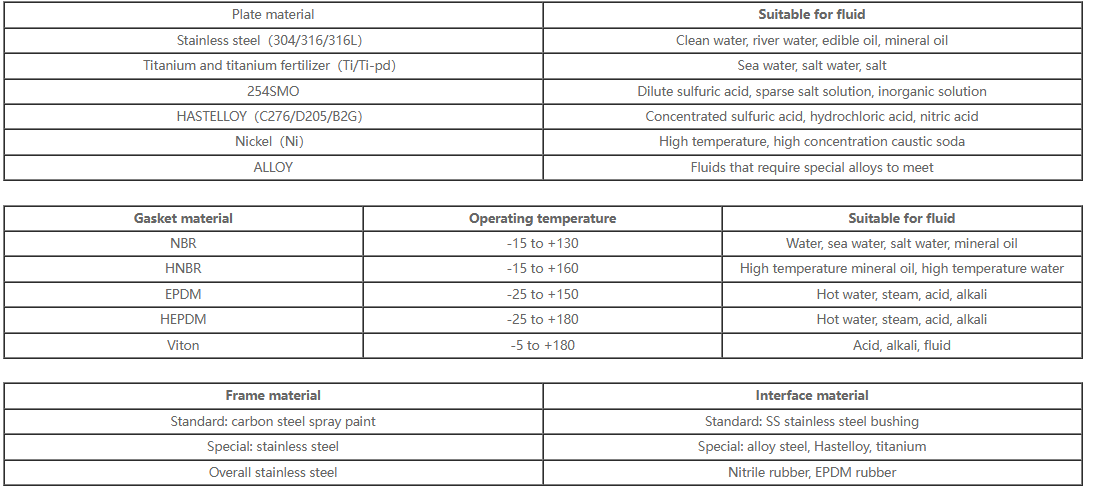
Material
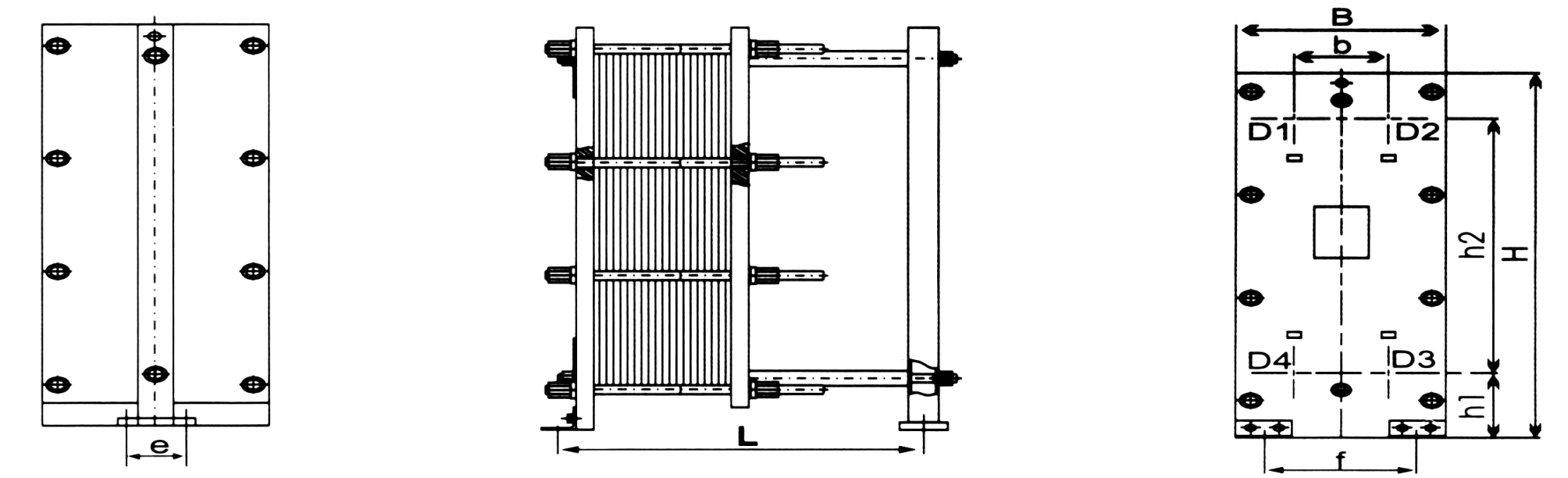
Installation Diagram
Advantage
There are no welds, it is easy to disassemble, and it is not prone to rust and corrosion.
The entire frame can be disassembled.
There is no seizure phenomenon between the nuts and bolts after long-term use.
The bolts can be easily tightened and loosened.
content is empty!